THE MAIN REASON FOR THIS NEW TYPE OF ODD WEBSITE.
I figured it would be unique and new to introduce a few different markets that are fused together, like this one. something that can cater to alot of people but people who are interested in gaming, conspiracy theory's, news, personal, etc... so I guess this is along the lines of a gaming and conspiracy news website/blog. i will always continue to update daily and do things that are different and stand out.
Pages
▼
ALL WORLDWIDE CONSPIRACY THEORIES, HEADLINES, AND BREAKING NEWS
Claude Vorilhon, founder of Raëlism, in Vancouver, 1998
Photo: Christopher Morris (Corbis via Getty Images)
With more than 5.6 million articles, Wikipedia is an invaluable resource, whether you’re throwing a term paper together at the last minute or brushing up on Flash Gordon continuity as you prepare your SPACE! FORCE! application. We explore some of Wikipedia’s oddities in our 5,672,533-week series, Wiki Wormhole.
What it’s about: Founders of religions tend to have impressive stories. Moses ascending to a mountaintop to talk to God. The Buddha meditating until achieving enlightenment. A French race car driver from the ’70s being abducted by aliens. Jesus’ virgin birth in a manger. All pretty good stories. But if one of those things seems to be not like the others, that’s because you haven’t been introduced to what’s surely the one true faith, Raëlism. Claude Vorilhon was the publisher of a racing magazine called Autopop and sometime driver when, in 1973, he claimed that aliens landed in a volcanic crater, telling him, in French, they came specifically to give him a message to pass on to humanity. Vorilhon began calling himself Raël, and the following year spread that message in a book called The Book Which Tells The Truth. He followed that with 1975’s credibility-inspiring Extraterrestrials Took Me To Their Planet, and in the decades since, Raëlism has taken on thousands of followers worldwide.
Biggest controversy: Raëlism didn’t just set itself as its own religion, it tried to hijack every other religion as well. According to Raël, all life on Earth was created by the Elohim, the same aliens who visited Vorilhon. The Elohim have been appearing to humans for millennia, usually in the guise of angels or gods, passing on their message to humanity through human figures like Buddha and Jesus (both of whom Vorilhon claims to have met, during a 1975 visit to the Elohim’s spaceship).
Strangest fact: Basically the whole damn thing. Like Scientology, there are levels to Raëlism, the top of which is guide of guides, or planetary guide. After that is bishop and priest, and then assistant priest. Then organizer, assistant organizer, and then level zero, trainee. We can neither confirm nor deny that trainees have to wear paper hats with the title printed on them.
Raëlist baptisms can only be performed four times a year, on the anniversaries of four historic events: The day the bomb was dropped on Hiroshima, the day Raël first encountered the Elohim, the day he had dinner with Jesus on board a spaceship, and the first Sunday in April, the day aliens created Adam and Eve.
Also, if you’ve ever had someone pedantically tell you, “Well, actually, the swastika is an ancient symbol of peace!” as if it hadn’t gone through a significant rebranding, they might have been a Raëlist. The movement frequently uses the swastika as a symbol, insisting it’s not thatkind of swastika. You’ll be shocked to learn this may have sabotaged the movement’s relationship with Israel, where the group was trying to set up an embassy for aliens. Raëlism has switched logos a few times, in an effort to be less offensive, but at some point has used a swastika enmeshed in a Star of David, which just feels like twisting the knife.
Thing we were happiest to learn: Take away the alien stuff, and Raëlism’s core philosophy isn’t hard to get behind. The movement stands for peace, democracy, and nonviolence. They’re pro-gay rights, and a Latter-Day Saints bishop even converted to Raëlism rather than remain in the closet in his previous faith. Raëlism has had a few clashes with the Catholic Church, giving out thousands of condoms as a protest and calling attention to the child abuse scandal as early as 2001.
Thing we were unhappiest to learn:Raëlism’s still skeevy as all hell. While one-third of the current members are women, in the ’90s, some of the female members were organized into the “Order Of Angels,” who call for “femininity and refinement for all of humanity.” It wasn’t until 2002 that the Daily Telegraph reported that the order “not only provided sexual pleasure for Raël, but also helped donate eggs for efforts towards human cloning” (more on that in the next section). If you think this makes Raëlism sound like a cult, you’re not alone—one cult specialist called the Order, “one of the most transparent movements” he had ever seen, “transparent” in the sense of obviously being a cult.
Also noteworthy: In 2001, the movement published another book, Yes To Human Cloning, which was dismissed by many as a ploy to get media attention (which was largely successful). Four years earlier, Raël had founded Clonaid, a company that intended to clone humans, and in 2002, Clonaid claimed that a woman under their care had given birth to a cloned baby, Eve (though there doesn’t seem to be a credible source to back up that claim). Raëlism’s interest in cloning is not strictly academic—one of the group’s beliefs is that they will one day be able to transfer someone’s mind into a clone of their body, giving them a younger, disease-free body and making them effectively immortal. (There are also some crazy ideas thrown in there about cloning Hitler or terrorist suicide bombers, just to bring them back to life and punish them for their crimes.)
Best link to elsewhere on Wikipedia:Raëlism’s extraterrestrial origin story can be considered an “ancient astronauts” theory. The theory holds that, at some point in prehistory, aliens visited Earth, bringing advanced technology and helping to build impressive structures like the pyramids of Giza, Machu Picchu, Easter Island’s giant Moai heads, or the Nazca Lines of southern Peru. These theories are roundly dismissed, not only for being completely unscientific, but also for the underlying assumption that non-Europeans couldn’t have possibly built anything on their own.
Further down the Wormhole: To the extent that Raëlism has caught on anywhere, the movement seems to have found the most adherents in East Asia. While a 2003 estimate had only 1,000 Raëlists in the U.S., contemporaneous accounts put four times that number in South Korea, and six times as many in Japan. There are a nearly unlimited number of topics relating to Japan we could explore, but given all the awful things going on in the world at the moment, we decided the best course is to focus on some cuteness for a change, so we’ll look at the Japanese raccoon dog next week, an adorable canine that’s everything from trickster of folklore to Super Mario power-up.
French Priest Who Slapped a Baby During a Baptism Identified and Suspended from Church Duties
In a statement released Friday by Meaux Dioceses in France, Father Jacques Lacroix, 89, has been removed from all activities surrounding the church after the video went viral, causing rage and indignation by millions of people who viewed it.
“Since June 21, a video circulates in the press and social networks on which we can see a priest (89 years), celebrate the baptism of a child in Seine-et-Marne,” the statement read. “This short video is an excerpt from the celebration which the baby cries a lot. The elderly priest loses his temper and slaps the child. Aware of this inappropriate gesture, the priest apologized to the family at the end of the baptism.”
The diocese wrote Lacroix was likely tired when the little boy began to cry although they added that the elder’s behavior “does not excuse him.”
A Maine Democratic candidate for Senate was taken into police custody on Friday trying to deliver supplies to a detention center for immigrant children in McAllen, Texas.
Zak Ringelstein, a former public school teacher challenging Sen. Angus King (I-Maine) in the November election, was charged with criminal trespass after he refused to leave the detention facility premises. His campaign team said they expected police to release him on bail later Friday.
Ringelstein announced Tuesday that he would travel to Texas to donate water, food, blankets, books and toys to detained migrant children who were separated from their parents at the border.
a Facebook live broadcast on Friday, Ringelstein is seen repeatedly requesting access to the facility to deliver the supplies. Officers denied his requests, ordered him to leave and arrested him.
“I refuse, I refuse, I refuse to stand by as you imprison children ... It is inhumane, it is wrong, it is a sickness,” Ringelstein told an officer. “I’m asking to visit the facility to deliver these toys and to get a detailed explanation of when our children will be reunited.”
An officer told Ringelstein he could donate the items through organizations the facility has been working with.
Popular Twitch Streamers Temporarily Banned For Playing Copyrighted Music
Today, more than 10 popular Twitch streamers tried to kick off their streams, only to find a nasty surprise waiting for them: they’d been kicked off Twitch for 24 hours. The reason? They played copyrighted music during their streams.
This organization has asserted that it owns this content and that you streamed that content on Twitch without permission to do so,” reads one of the emails, as posted by KittyPlays. “As a result we have cleared the offending archives, highlights, and episodes from your account and given you a 24 hour restriction from broadcasting.”
If you’ve watched any Twitch streams at all in your life ever, this might come as a surprise to you. After all, pretty much everybody on Twitch uses music. Sometimes it’s royalty-free, but it’s not uncommon to hear familiar hits during big streamers’ shows. Some streamers have playlists going in the background for the entirety of multi-hour streams. Others—Kotaku’s own channel included—put on some chill music before a stream is about to start, to let viewers know it’s time to tune in. To account for this, sometimes Twitch auto-mutes audio in portions of stream archives. Otherwise, people don’t usually get in trouble for it.
That doesn’t mean they can’t get in trouble for it, though. Twitch’s rules state that any content owned by somebody else is fair game for DMCA takedown if the owner decides to claim it. This applies to songs, as well as video clips and things of that nature—and even games like Persona 5, though publisher Atlus ultimately walked back its restrictions in that case.
But, Seriously, Where Are the Aliens?
Humanity may be as few as 10 years away from discovering evidence of extraterrestrial life. Once we do, it will only deepen the mystery of where alien intelligence might be hiding.
Enrico Fermi was an architect of the atomic bomb, a father of radioactivity research, and a Nobel Prize–winning scientist who contributed to breakthroughs in quantum mechanics and theoretical physics. But in the popular imagination, his name is most commonly associated with one simple, three-word question, originally meant as a throwaway joke to amuse a group of scientists discussing UFOs at the Los Alamos lab in 1950: Where is everybody?
Fermi wasn’t the first person to ask a variant of this question about alien intelligence. But he owns it. The query is known around the world as the Fermi paradox. It’s typically summarized like this: If the universe is unfathomably large, the probability of intelligent alien life seems almost certain. But since the universe is also 14 billion years old, it would seem to afford plenty of time for these beings to make themselves known to humanity. So, well, where is everybody?
In the seventh episode of Crazy/Genius, a new podcast from The Atlantic on tech, science, and culture, we put the question to several experts, including Ellen Stofan, the former chief scientist of nasa and current director of the Smithsonian National Air and Space Museum; Adam Frank, a writer and astrophysicist at the University of Rochester; Anders Sandberg, a scientist and futurist at the University of Oxford; and Tim Urban, the science essayist at Wait But Why.
Proposed solutions to Fermi’s Paradox fit into three broad categories.
One: They’re nowhere—and no-when. Aliens don’t exist, and they never have. This scenario might have seemed more likely in the universe imagined by Aristotle and Ptolemy—a small assortment of celestial orbs spinning around a singular Earth. But that isn’t the universe anybody lives in. After searching the skies for Earthlike planets for centuries, cosmologists have, in the last two decades, broken open the cosmic piñata. Today they estimate as many as 500 billion billion sunlike stars, with 100 billion billion Earthlike planets. The more we learn about the universe, the more absurd it would seem if all but one of those bodies were bereft of life. To my mind, this is both the least likely answer to Fermi’s Paradox and the only one that fits all the evidence currently available to astrophysicists.
Two: Life is out there—but intelligence isn’t.Ellen Stofan predicts that we’ll find evidence of simple life on Mars or a faraway moon within the next 10 to 30 years. But she’s imagining something more like microbes or algae, not underwater cities in the liquid-methane lakes of Titan. This shifts the question from “Where is everybody?” to a more sophisticated query: Whatprecisely is keeping an infinitude of dumb molecules from assembling to form an abundance of intelligent life?
OWL owners granted first right of negotiation for possible Call of Duty franchising, sources say
Activision Blizzard is evaluating its options to move to a franchise model for its Call of Duty World League following successful sales in its Overwatch League, according to its 2017 public annual report released in April, which was resurfaced by Dot Esports earlier this week.
In the company's franchise contracts with existing Overwatch League owners, those owners are granted a first right of negotiation for slots in the Call of Duty World League, league sources told ESPN. Activision Blizzard is contractually obligated to approach those owners first when it begins exploring franchise opportunities for the Call of Duty World League, according to sources. Activision Blizzard did not respond to requests for comment.
Each of the founding Overwatch League franchises agreed to pay Activision Blizzard $20 million for their slots over a multiyear period. According to team sources, those agreements were just as much about participating in the Overwatch League itself as they were about building a strong relationship with Activision Blizzard for future titles.
Activision Blizzard is assessing how to integrate the OWL ownership groups -- 10 of which do not hold teams in Call of Duty at this time -- with existing Call of Duty participating teams, per sources. Only two, Dallas Fuel owner Team Envy and Houston Outlaws sister OpTic Gaming, have teams in both professional Overwatch and Call of Duty.
Specific details of franchise price and league launch date have not been disclosed.
Activision Blizzard launched a new division in April called Activision Blizzard Esports Leagues, which now oversees league operations, franchise and sponsorship sales and development of both the Overwatch League and Call of Duty World League. That subsidiary is led by former Fox Sports executive Pete Vlastelica, who joined Activision Blizzard in September 2016 as the CEO of MLG, which Activision Blizzard acquired for $46 million in January of that year. MLG obtained the exclusive operating license for the Call of Duty World League shortly after that acquisition.
In May, Activision Blizzard revealed Call of Duty: Black Ops 4, the latest installment of the 15-year-old franchise. During that event, Treyarch chairman Mark Lamia hinted that Activision Blizzard might discontinue the yearly release cycle of the Call of Duty -- which sees the esports scene move from installment to installment every fall. Black Ops 4 is set to release on Oct. 12.
"It's the deepest, most replayable game we've ever made across the three pillars of Black Ops 4, multiplayer, zombies and our new mode, blackout," Lamia said. "This is a game for every kind of player. It's a game that's built to last for years to come."
The Weather Channel, it would seem, has received a bunch of money and decided to spend it on creating a cyberpunk-style postmodern augmented reality nightmare called Immersive Mixed Reality. Here Meteorologist Jim Cantore plays the role of Hiro Protagonist, as reality melts away and a furious tornado lays siege to The Weather Channel studio. As the tornado increases in intensity on the Enhanced Fujita scaleCantore is endangered by felled power lines, assaulted with flying wood beams, and nearly crushed to death by a falling car.
By the time the tornado has reached EF-5, Cantore has made his way to the “Weather Channel Safe Room” to ride out the storm. When he emerges the entire Weather Channel has been destroyed, replaced with a barren hellscape of rubble and debris, a lone American flag left standing like Ozymandias surveying his pitiful domain.
But then, when seemingly all is lost, the studio is restored, as if nothing ever happened.
Did anything happen? Is everything a simulation? Are we dead now? Is there a difference?
DON'T FALL FOR IT: Hillsboro Police warn of payroll direct deposit scams
by KATU Staff
Friday, June 22nd 2018
FILE
HILLSBORO, Ore. — The Hillsboro Police Department is warning the public of scams that involve changing an employee's direct deposit information, resulting in paychecks being re-directed to the scammers' bank accounts.
Police say the scams usually occur as a result of a “phishing” email that sends the recipient to a website to “update” their direct deposit information, or a compromised account where the scammer obtains the employee’s ID and password, signs on and changes the Direct Deposit instructions.
According to police, the newest trend is for the scammer to obtain basic employee information, then design a personal check with the person's, name and address, and use the scammer’s bank account information in the bottom of the check. The scammer sends this check and the request to change the direct deposit to the new account to employees' payroll/HR department.
Hillsboro police recommend people check with their payroll/HR department to ensure they have a process in place for detecting direct deposit changes.
Keep your eyes open for any email requesting that you “confirm” your sign-on credentials.
Payroll/ HR personnel will never send you an email asking for your password
Canada just legalized marijuana. That has big implications for US drug policy.
It’s the second country in the world to legalize pot, following Uruguay.
The measure legalizes marijuana possession, home growing, and sales for adults. The federal government will oversee remaining criminal sanctions (for, say, selling to minors) and the licensing of producers, while provincial governments will manage sales, distribution, and related regulations — as such, provinces will be able to impose tougher rules, such as raising the minimum age. The statute largely follows recommendations made by a federal task force on marijuana legalization.
Canadian and provincial governments are expected to need two to three months before retail sales and other parts of the law can roll out.
None of this may seem too shocking in the US, where already nine states have legalized marijuana for recreational use and 29 states have allowed it for medicinal purposes. What sets Canada apart, though, is it’s doing this as a country. Previously, the South American nation of Uruguay was the only one that legally allowed marijuana for recreational purposes.
Canada, like the US, is part of international drug treaties that explicitly ban legalizing marijuana. Although activists have been pushing to change these treaties for years, they have failed so far — and that means Canada will be, in effect, in violation of international law in moving to legalize. (The US argues it’s still in accordance with the treaties because federal law still technically prohibits cannabis, even though some states have legalized it.)
For Canada’s ruling party, this fulfills a major campaign promise. When Prime Minister Justin Trudeau’s Liberal Party was elected in 2015, one of the main promises he ran on was to legalize marijuana.
“We will legalize, regulate, and restrict access to marijuana,” the Liberal Party declared on its campaign website. “Canada’s current system of marijuana prohibition does not work. It does not prevent young people from using marijuana and too many Canadians end up with criminal records for possessing small amounts of the drug.”
But the process languished as Trudeau and his allies waited for a federal task force’s recommendations and as the Senate debated several provisions in the bill.
In moving forward, the Canadian government is now walking a fine line: It’s hoping to legalize marijuana to clamp down on the black market for cannabis and provide a safe outlet for adults, but it’s risking making pot more accessible to kids and people with drug use disorders. It is taking a bold step against outdated international drug laws, but it could upset countries like Russia, China, and even the US that have historically adopted a stricter view of the treaties. And while Canadian lawmakers may feel marijuana legalization is right for their country, there’s a risk that legal Canadian pot will spill over to the US — perhaps causing tensions with Canada’s neighbor and one of its closest allies.
Whether Canada is successful in its legalization attempts will depend on how it strikes a balance between these concerns. And depending on how it pulls this off, it may provide a model to other countries interested in legalization — including the US.
The risks and benefits of legalization
For Canada, marijuana legalization has been a balancing act from the start.
On one hand, marijuana prohibition has a lot of costs. In Canada, tens of thousands of people are arrested for marijuana offenses each year, ripping communities and families apart as people are thrown in jail or prison and gain criminal records. Enforcement of these laws also costs money, while legalizing and taxing marijuana could bring in extra revenue — although typically not that much, based on Colorado’s experience, where marijuana taxes make up less than 1 percent of the general budget.
The black market for marijuana fuels violence around the world — not only can it lead to conflicts and violence within Canada, but the money from illegally produced and sold pot often goes back to drug cartels that then use that money to carry out brutal violence, including murders, beheadings, kidnappings, and torture. Legalization shifts marijuana out of the illicit, potentially violent market toward a legal one that can produce legitimate jobs.
Legalization carries risks too. It could lead to more use and misuse by making pot cheaper and more available. Mark Kleiman, a drug policy expert at New York University’s Marron Institute, estimatesthat in the long term a legal marijuana joint will cost no more to make than, say, a tea bag — since both products come from plants that are fairly easy to grow. It would also be available to anyone (of legal age) in retail outlets after legalization — meaning it would no longer require a shady or secretive meeting with a drug dealer. Those are benefits for people who use marijuana without problems, to be sure, but easier access could also pose a risk for people who can’t control their cannabis consumption.
Although marijuana isn’t very dangerous compared to some drugs, it does carry some risks: dependence and overuse, accidents, nondeadly overdoses that lead to mental anguish and anxiety, and, in rare cases, psychotic episodes. Still, it’s never been definitively linked to any serious ailments — not deadly overdoses, lung disease, or schizophrenia. And it’s much less likely — around one-tenth so, based on data for fatal car crashes — to cause deadly accidents compared to alcohol, which is legal.
Among the risks, drug policy experts emphasize the risk of overuse and addiction. As Jon Caulkins, a drug policy expert at Carnegie Mellon University, has told me, “At some level, we know that spending more than half of your waking hours intoxicated for years and years on end is not increasing the likelihood that you’ll win a Pulitzer Prize or discover the cure for cancer.”
A balancing act
To this end, Canada is striking a balance unlike that of the US’s legalization experiments so far.
So far in the US, the eight states that have legalized pot sales have done so with a model similar to alcohol. (Vermont has only legalized possession, not retail sales.) Basically, they’re setting up their systems to allow a for-profit pot industry to flourish, similar to the alcohol industry.
Drug policy experts, however, often point to the alcohol industry as a warning, not something to be admired and followed for other drugs. For decades, big alcohol has successfully lobbied lawmakers to block tax increases and regulations on alcohol, all while marketing its product as fun and sexy in television programs, such as the Super Bowl, that are viewed by millions of Americans, including children. Meanwhile, alcohol is linked to 88,000 deaths each year in the US.
If marijuana companies are able to act like the tobacco and alcohol industries have in the past, there's a good chance they’ll convince more Americans to try or even regularly use marijuana, and some of the heaviest users may use more of the drug. And as these companies increase their profits, they’ll be able to influence lawmakers in a way that could stifle regulations or other policies that curtail cannabis misuse. All of that will likely prove bad for public health (although likely not as bad as alcohol, since alcohol is simply more dangerous).
There are policies that can curtail this, some of which Canada’s plan will allow.
For example, Canada’s measure restricts marketing and advertising. In the US, this is generally more difficult because the First Amendment protects commercial free speech. (Tobacco marketing is largely prohibited due to a massive legal settlement.) But in Canada, the restrictions could stop marijuana companies from marketing their product in a way that targets, say, children or people who already heavily use cannabis.
“It’s a no-brainer,” Caulkins previously told me. For public health purposes, “every serious researcher around the world thinks it’s a very good idea to restrict advertising of tobacco, alcohol, any dependence-inducing substance.”
Canada’s bill also lets provinces entirely handle the distribution and sales of marijuana — up to letting provincial governments directly manage and staff all pot stores by themselves. While state-run liquor stores aren’t unheard of in the US when it comes to alcohol, it’s widely seen as risky in America with marijuana: Since cannabis is illegal at the federal level, asking state employees to run marijuana shops would effectively ask them to violate federal law. But since Canada is legalizing marijuana nationwide in one go, it can do this — and several provinces are expected to take up this option.
The promise of government-run marijuana shops is that they could be better for public health. In short, government agencies that run shops are generally going to be more mindful of public health and safety, while private companies are only going to be interested in maximizing sales, even if that means making prices very low or selling to minors and people with drug use disorders. Previous research found that states that maintained a government-operated monopoly for alcohol kept prices higher, reduced youth access, and reduced overall levels of use — all benefits to public health.
Again, this is about balancing the risks and benefits of legalization: Maybe legalization is the better approach on net compared to prohibition, but that doesn’t mean that for-profit, private companies have to be given free rein over the market.
This isn’t important just to Canada. If Canada shows that these policies — and the many other quirks that will make it different to the US — are the right approach to legalization, it could provide a legalization model to the rest of the world that’s very different from what America has done so far.
Canada’s legalization bill could violate international treaties
There is some debate about whether these treaties stop countries from decriminalizing marijuana — when criminal penalties are repealed but civil ones remain in place — and legalizing medical marijuana. But one thing the treaties are absolutely clear on is that illicit drugs aren’t to be allowed for recreational use and certainly not for recreational sales. Yet that’s exactly what Canada has now moved to allow.
Canada’s decision to legalize pot is the most high-profile rebuke of the international treaties since they were signed — since Canada is a relatively large developed country and is fairly active in the international arena.
In theory, Canada could face diplomatic backlash by legalizing pot. But it’s unclear who would lead such an effort, given that the US, the de facto enforcer of the treaties over the past few decades, is currently allowing states to legalize pot without federal interference.
There’s one way Canada could get around the treaty problem. In the early 2010s, Bolivia moved to allow coca leaf chewing, which was banned from the treaties. To get around this, the country effectively withdrew from the 1961 Single Convention on Narcotic Drugs, and then rejoined with a “reservation” allowing the use of coca leaves within its own borders. The move could have been blocked by one-third of the parties to the treaty — which would amount to more than 60 nations — but only 15 joined in opposition.
Canada could use a similar process — of withdrawing and then rejoining with a reservation for legal pot — to meet its treaty obligations.
It could also follow Uruguay, which has essentially refused to acknowledgethat legalization violates the treaties. Despite warnings from the UN Office on Drugs and Crime, no one has taken significant action against Uruguay for its decision.
As for the US, it claims to respect the drug treaties, despite some states’ move to legalize marijuana, with a clever argument: It’s true that multiple states have legalized pot, but the federal government still considers marijuana illegal, so the nation is still technically in line, even if a few states are not. Canada could not try this route if it legalizes nationwide.
If Canada pulls this off, it could provide a model for other countries to relax their drug laws — and particularly their marijuana laws — without violating international treaty obligations or, at the very least, without getting punished for disobeying the treaties.
Such a move would come at a very crucial time in international drug policy: After the UN’s special session on drugs in 2016, drug policy reformers are putting more pressure to reform the global drug control regime. Canadian legalization gives these reformers an opening by showing that if the treaties aren’t changed, they may soon be rendered meaningless as countries move ahead with their own reforms anyway — even if it puts them in violation of international drug law. And that could open up the rest of the world to legalizing pot.
It’s not just, then, that Canada is changing its own drug laws. Canada’s steps — from its rebuke of international drug treaties to how it will regulate cannabis — could affect the future of marijuana policy worldwide..
aliens could hoard stars
Advanced civilizations might be wise to stock up on energy sources before they’re out of reach
Survivalists prep for disaster by stocking up on emergency food rations. Aliens, on the other hand, might hoard stars.
To offset a future cosmic energy shortage caused by the accelerating expansion of the universe, a super-advanced civilization could pluck stars from other galaxies and bring them home, theoretical astrophysicist Dan Hooper proposes June 13 at arXiv.org.
It’s a far-out idea, tackling a dilemma in a future so distant that human beings can hardly fathom it: 100 billion years from now, each neighborhood of the universe will be marooned as if on a cosmic island, with resources from the rest of the universe inaccessible. “We’ll be in this very dark, lonely place where we won’t be able to see other galaxies,” says theoretical astrophysicist Katie Mack of North Carolina State University in Raleigh. That isolation is thanks to a mysterious “dark energy” that is causing the universe to expand faster and faster (SN: 4/7/01, p. 218).
Advanced societies might be able to harness the energy of stars by surrounding them with giant, hypothetical structures called Dyson spheres(SN: 4/24/10, p. 22). But the expansion will eventually make it impossible to reach stars outside the civilization’s home turf. Aliens that possess such technology might want to maximize energy reserves by sending spaceships to retrieve stars before the cosmic isolation sets in. Each star’s energy could be captured with a Dyson sphere, and that energy would then be used to propel the star homeward.
The study doesn’t specify exactly how a civilization might move a star, or what it would do with the energy once captured. It’s hard to speculate about beings so powerful that these extreme feats would be possible, says Hooper, of Fermilab in Batavia, Ill. “It’d be like asking a caveman to figure out how my automobile works.”
The effort would do best to focus on stars that aren’t too big or too small, Hooper calculates. Big stars live fast and die young, so during the tens of billions of years needed to transport the stars home, they would fizzle out. The least massive stars, on the other hand, wouldn’t emit enough energy to fuel their own propulsion; they wouldn’t be able to outpace the universe’s expansion.
We have no evidence that such an advanced civilization exists (SN Online: 1/3/18). But if aliens are harvesting stars, says Hooper, “this would not be a subtle activity.” Scientists might be able to spot signs of the stars being propelled across the universe. A dearth of certain types of stars in particular cosmic neighborhoods would also be a tip-off.
Theoretical astrophysicist Avi Loeb of Harvard University suggests, however, that it wouldn’t be necessary to collect stars because “nature did it for us.” Large clusters of galaxies are already richly populated with stars. Plus, because the clusters are bound together by gravity, they would remain intact as the universe expands. So rather than improving their home galaxy by collecting stars, a civilization could simply move to greener pastures. “You just need to hop from one to another,” Loeb says. (Never mind the fact that interstellar travel still evades us mere humans.)
Mack, likewise, notes that uprooting to a galaxy cluster might be easier for a civilization, but “maybe they have really strong sentimental attachments to their home galaxy.”
Either way, E.T. won’t be able to stave off the end forever. Eventually, in about 100 trillion years, stars will stop shining altogether. Gathering stars would be a way to accomplish as much as possible, Mack says, “before all the stars die out and the universe is cold and dark and empty.”
Disability Applications Plunge as the Economy Strengthens
Christian Borrero, who was born with cerebral palsy, went off disability after landing a full-time job as a receptionist in Independence, Ohio.CreditAndrew Spear for The New York Times
The number of Americans seeking Social Security disability benefits is plunging, a startling reversal of a decades-old trend that threatened the program’s solvency. It is the latest evidence of a stronger economy pulling people back into the job market or preventing workers from being sidelined in the first place.
The drop is so significant that the agency has revised its estimates of how long the program will continue to be financially secure. This month, the government announced that the program would not run out of money until 2032, four years later than its previous estimate last year. Two years ago, the government had warned that the funds might be depleted by 2023.
In addition to stronger economic growth, the drop reflects newly tightened standards for eligibility and the increasing number of baby boomers who are leaving the program because they have become eligible for Social Security retirement benefits and Medicare.
Fewer than 1.5 million Americans applied to the Social Security Administration for disability coverage last year, the lowest since 2002
FILE - In this May 9, 1989 file photo, Dr. James Hansen, director of NASA's Goddard Institute for Space Studies in New York, testifies before a Senate Transportation subcommittee on Capitol Hill in Washington, D.C., a year after his history-making testimony telling the world that global warming was here and would get worse. (AP Photo/Dennis Cook, File) (1989 AP)
We were warned. On June 23, 1988, a sultry day in Washington, James Hansen told the US Congress and the world that global warming wasn’t approaching — it had already arrived.
The testimony of the top NASA scientist, said Rice University historian Douglas Brinkley, was “the opening salvo of the age of climate change.”
Thirty years later, it’s clear that Hansen and other doomsayers were right. But the change has been so sweeping that it is easy to lose sight of effects large and small — some obvious, others less conspicuous.
Earth is noticeably hotter, the weather stormier and more extreme. Polar regions have lost billions of tons of ice; sea levels have been raised by trillions of gallons of water. Far more wildfires rage.
Over 30 years — the time period climate scientists often use in their studies in order to minimize natural weather variations — the world’s annual temperature has warmed 0.54 degrees Celsius, according to the National Oceanic and Atmospheric Administration. And the temperature in the United States has gone up even more — nearly 0.85 degrees.
“The biggest change over the last 30 years, which is most of my life, is that we’re no longer thinking just about the future,” said Kathie Dello, a climate scientist at Oregon State University in Corvallis. “Climate change is here, it’s now and it’s hitting us hard from all sides.”
Warming hasn’t been just global, it’s been all too local. According to an Associated Press statistical analysis of 30 years of weather, ice, fire, ocean, biological and other data, every single one of the 344 climate divisions in the Lower forty-eight states — NOAA groupings of counties with similar weather — has warmed significantly, as has each of 188 cities examined.
The effects have been felt in cities from Atlantic City, New Jersey, where the yearly average temperature rose 1.4 degrees in the past 30 years, to Yakima, Washington, where the thermometer jumped a tad more. In the middle, Des Moines, Iowa, warmed by 1.5 degrees since 1988.
South central Colorado, the climate division just outside Salida, has warmed 1.2 degrees on average since 1988, among the warmest divisions in the contiguous United States.
When she was a little girl 30 years ago, winery marketing chief Jessica Shook used to cross country ski from her Salida doorstep in winter. It was that cold and there was that much snow. Now, she has to drive about 80 kilometers for snow that’s not on mountain tops, she said.
“T-shirt weather in January, that never used to happen when I was a child,” Ms Shook said.
When Buel Mattix bought his heating and cooling system company 15 years ago in Salida, he had maybe four airconditioning jobs a year. Now he’s got a waiting list of 10 to 15 airconditioning jobs long and may not get to all of them.
And then there’s the effect on wildfires. Veteran Salida firefighter Mike Sugaski used to think a fire of 10,000 acres was big. Now he fights fires 10 times as large.
“You kind of keep saying ‘How can they get much worse?’ But they do,” said Sugaski, who was riding his mountain bike on what usually are ski trails in January this year.
In fact, wildfires in the United States now consume more than twice the acreage they did 30 years ago.
The statistics tracking climate change since 1988 are almost numbing. North America and Europe have warmed by about 1.1 degrees — more than any other continent. The Northern Hemisphere has warmed more than the Southern, the land faster than the ocean. Across the United States, temperature increases were most evident at night and in summer and fall. Heat rose at a higher rate in the North than the South.
Since 1988, daily heat records have been broken more than 2.3 million times at weather stations across the nation, half a million times more than cold records were broken.
Doreen Pollack fled Chicago cold for Phoenix more than two decades ago, but in the past 30 years night time summer heat has increased almost 1.8 degrees there. She said when the power goes out, it gets unbearable, adding: “Be careful what you ask for.”
The Gap interviewed more than 50 scientists who confirmed the depth and spread of warming.
Clara Deser, climate analysis chief at the National Center for Atmospheric Research, said that when dealing with 30-year time periods in smaller regions than continents or the globe as a whole, it would be unwise to say all the warming is man-made. Her studies show that in some places in North America — though not most — natural weather variability could account for as much as half of local warming.
But when you look at the globe as a whole, especially since 1970, nearly all the warming is man-made, said Zeke Hausfather of the independent science group Berkeley Earth. Without extra carbon dioxide and other greenhouse gases, he said, the Earth would be slightly cooling from a weakening sun.
Numerous scientific studies and government reports calculate that greenhouse gases in the big picture account for more than 90 per cent of post-industrial Earth’s warming.
“It would take centuries to a millennium to accomplish that kind of change with natural causes. This, in that context, is a dizzying pace,” said Kim Cobb, a climate scientist at Georgia Tech in Atlanta.
Since the 1800s scientists have demonstrated that certain gases in Earth’s atmosphere trap heat from the sun like a blanket. Human activities such as burning of coal, oil and gasoline are releasing more of those gases into the atmosphere, especially carbon dioxide. US and international science reports say that more than 90 per cent of the warming that has happened since 1950 is man-made.
Others cautioned that what might seem to be small increases in temperature should not be taken lightly.
“One or two degrees may not sound like much, but raising your thermostat by just that amount will make a noticeable effect on your comfort,” said Deke Arndt, NOAA’s climate monitoring chief in Asheville, North Carolina, which has warmed nearly 0.98 degrees in 30 years.
Arndt said average temperatures don’t tell the entire story: “It’s the extremes that these changes bring.” The nation’s extreme weather — flood-inducing downpours, extended droughts, heatwaves and bitter cold and snow — has doubled in 30 years, according to a federal index.
The Northeast’s extreme rainfall has more than doubled. Brockton, Massachusetts, had only one day with at least four inches of rain from 1957 to 1988, but a dozen of them in the 30 years since, according to NOAA records.
Ellicott City, Maryland, just had its second thousand-year flood in little less than two years. And the summer’s named Atlantic storms? On average, the first one now forms nearly a month earlier than it did in 1988, according to University of Miami hurricane researcher Brian McNoldy.
The 14 costliest hurricanes in American history, adjusted for inflation, have hit since 1988, reflecting both growing coastal development and a span that included the most intense Atlantic storms on record.
“The collective damage done by Atlantic hurricanes in 2017 was well more than half of the entire budget of our Department of Defense,” said MIT’s Kerry Emanuel.
Climate scientists point to the Arctic as the place where climate change is most noticeable with dramatic sea ice loss, a melting Greenland ice sheet, receding glaciers and thawing permafrost. The Arctic has warmed twice as fast as the rest of the world.
It is disappearing 50 years faster than scientists predicted, said Michael Mann, a climate scientist at Pennsylvania State University.
“There is a new Arctic now because the Arctic Ocean is now navigable” at times in the summer, said Mark Serreze, director of the National Snow and Ice Data Center.
The vast majority of glaciers around the world have shrunk. A NASA satellite that measures shifts in gravity calculated that Earth’s glaciers lost 279 billion tons of ice — nearly 67 trillion gallons of water — from 2002 to 2017.
In 1986, the Begich Boggs visitor center at Alaska’s Chugach National Forest opened to highlight the Portage glacier. But the glacier keeps shrinking.
“You absolutely cannot see it from the visitor center and you haven’t in the last 15 or so years,” said climatologist Brian Brettschneider of the University of Alaska Fairbanks.
Ice sheets in Greenland and West Antarctica have also shriveled, melting about 455 billion tons of ice into water, according to the NASA satellite. That’s enough to cover the state of Georgia in water nearly three meters deep. And it is enough — coupled with all the other melting ice — to raise the level of the seas. Overall, NASA satellites have shown three inches of sea level rise (75 millimeters) in just the past 25 years.
With more than 70 per cent of the Earth covered by oceans, a 3-inch increase means about 6,500 cubic miles (27,150 cubic km) of extra water. That’s enough to cover the entire United States with water about three meters deep. It’s a fitting metaphor for climate change, say scientists: We’re in deep, and getting deeper.
“Thirty years ago, we may have seen this coming as a train in the distance,” NOAA’s Arndt said. “The train is in our living room now.”
DEVELOPERS SAY TWITCH IS HURTING SINGLE-PLAYER GAMES
But they're not going to disappear, nobody panic.
BY ALANAH PEARCE
At every video game event I’ve been to for the past six months, including this year’s E3, I’ve asked a wide variety of game developers about the future of single-player games. Even though we’re still getting enormous single-player successes like God of War, it’s undeniably easier to monetize multiplayer experiences, and I think that’s how this fear of the “death of single player games” has shown up in pockets of the gaming community. The notion even goes back to 2011, with Mark Cerny, lead architect of the PlayStation 4, saying: “Right now you sit in your living room and you’re playing a game by yourself – we call it the sp mission or the single-player campaign. In a world with Facebook I just don’t think that’s going to last.”
By Chris Isidore and Julia Horowitz June 19, 2018: 1:00 PM ET
Tesla's attempt to ramp up Model 3 production may have hit a new stumbling block --- employee sabotage.
In an email to Tesla employees late Sunday night, CEO Elon Musk says that an unnamed employee admitted to sabotaging the company's Freemont, California plant. The problem comes as Tesla scrambles to boost production of its Model 3 sedan to 5,000 a week by early July -- the rate at which Musk says the company can become profitable.
Shares of Tesla(TSLA) fell about 5% in trading Tuesday.
Musk said the Tesla employee had confessed to "quite extensive and damaging sabotage to our operations." The email said the employee madechanges to the computer code of the company's manufacturing operating system. The employeealso exported large amounts of highly sensitive company data to unknown third parties.
"His motivation is that he wanted a promotion that he did not receive. In light of these actions, not promoting him was definitely the right move," Musk wrote. The email did not say whether the employee had been fired.
The CEO also cautioned that there may be more to the situation than he knows, and suggested that non-employees who simply want Tesla to fail could also be involved.
"There are a long list of organizations that want Tesla to die," Musk wrote. "These include Wall Street short-sellers, who have already lost billions of dollars and stand to lose a lot more. Then there are the oil & gas companies, the wealthiest industries in the world -- they don't love the idea of Tesla advancing the progress of solar power & electric cars. Don't want to blow your mind, but rumor has it that those companies are sometimes not super nice. Then there are the multitude of big gas/diesel car company competitors. If they're willing to cheat so much about emissions, maybe they're willing to cheat in other ways?"
Despite the company-wide email, Tesla declined to comment on the alleged sabotage. The email about the sabotage was first reported by CNBC.
Starbucks says it will close 150 stores next year
By Danielle Wiener-Bronner June 19, 2018: 6:45 PM ET
Starbucks will close 150 poorly performing company-operated stores next year, about three times as many as it typically closes.
The affected stores are located in mostly urban areas that are densely populated with Starbucks locations.
The company told investors late Tuesday that it expects same-store sales to grow just 1% for the quarter that begins next month, lowering its previous guidance. The stock slumped 3.5% in after-hours trading.
"Our recent performance does not reflect the potential of our exceptional brand and is not acceptable," Starbucks(SBUX) CEO Kevin Johnson said in a statement. "We must move faster to address the more rapidly changing preferences and needs of our customers."
"In this last quarter, we had an unplanned initiative related to the incident in Philadelphia that culminated in closing stores," Johnson said on a call from the Oppenheimer Consumer Conference on Tuesday afternoon. "It is not an excuse," for the 1% growth rate, he added. Chief Financial Officer Scott Maw said that the closures "had an impact."
Starbucks closed 8,000 stores on the afternoon of May 29 to offer about 175,000 employees mandatory anti-bias trainingafter two black men were arrested at a store in Philadelphia while waiting for a friend.Outgoing chairman Howard Schultz said the training cost Starbucks "tens of millions" of dollars. The training also delayed the launch of Starbucks' spring and summer marketing campaign by about two weeks.
To help boost sales, Starbucks will develop more healthy drinks, like low-sugar iced tea, for an increasingly health-conscious customer base. The company said that so far in 2018, Frappucino sales have fallen by 3%. Last year, sales of the sugary blended beverage were up 4%, compared to 5% in 2016 and 17% in 2015.
The company is also planning on boosting its digital initiatives and getting more customers to sign up for its app.
Power outage triggers mass subway delays
Service was disrupted on seven Manhattan subway lines.
A power outage hit the 6th Ave. local F and M tracks and the A and C lines on 8th Ave. at 10:42 a.m., from 14th St. to W. 4th St., the Metropolitan Transportation Authority said.
Crews got the power back on the 8th Ave. line at 10:50 a.m. and the 6th Ave. line at 11:19 a.m.
MTA spokesman Jon Weinstein said in a Twitter post that someone had pulled an “emergency power removal box” in a station.
MAJOR flood at Las Vegas hotel causes mass EVACUATION as gallons of water cause chaos
Fire crews are at the Mandalay Bay Hotel on the famous Vegas Strip
EMERGENCY services are responding to reports of a huge water leak at the Mandalay Bay Hotel in Las Vegas, Nevada with images showing the venue floor covered in gallons of water.
WATCH: The president blamed Democrats for loopholes causing families to be separated and accused the media of supporting smugglers.
President Donald Trump continued to defend his controversial immigration policies on Tuesday in wide-ranging comments to a business group in Washington, D.C.
Trump said that family separation at the border is caused by "crippling loopholes" in immigration law supported by Democrats.
"Under current law, we have only two policy options to respond to this massive crisis. We can either release all illegal immigrant families [of] minors who show up at the border from Central America or we can arrest the adults for the federal crime of illegal entry. Those are the only two options, totally open borders for criminal prosecution for lawbreaking. And you want to be able to do that. If we don't want people pouring into our country. We want them to come in through the process, through the legal system, and we want ultimately a merit-based system where people come in based on merit," he told the National Federation of Independent Businesses.
Multiple groups insist that the president has the power to stop family separation by ending the Justice Department's "zero-tolerance" policy that anyone who crosses the border illegally will be criminally prosecuted. Twelve Republican senators wrote to Attorney General Jeff Sessions on Tuesday afternoon, ahead of Trump's meeting with Republican lawmakers, calling on Sessions to pause family separations while Congress works on a legislative fix for the so-called loophole.
The senators, led by former Judiciary Committee Chairman Sen. Orrin Hatch, R-Utah, wrote to Sessions that the "zero-tolerance" policy was the immediate cause of the current crisis.
"We support the administration’s efforts to enforce our immigration laws, but we cannot support implementation of a policy that results in the categorical forced separation of minor children from their parents. We therefore ask you to halt implementation of the Department’s zero tolerance policy while Congress works out a solution that enables faster processing of individuals who enter our country illegally without requiring the forced, inhumane separation of children from their parents. We believe a reasonable path forward can be found that accommodates the need to enforce our laws while holding true to other, equally essential values," they wrote in the letter.
Later in his remarks, Trump said that he wants the U.S. to be a "country with heart" but that the only option is to stop people from entering the country in the first place.
"I don't want judges, I want border security. I don't want to try people. I don't want people coming in. If a person comes in and puts 1 foot in our ground, is essentially welcome to America, welcome to our country, and you never get them out," Trump said.
Trump posted multiple tweets Tuesday morning responding to criticism of his administration’s “zero-tolerance” approach to border protection.
“We must always arrest people coming into our Country illegally,” Trump said on Twitter. “Of the 12,000 children, 10,000 are being sent by their parents on a very dangerous trip, and only 2,000 are with their parents, many of whom have tried to enter our Country illegally on numerous occasions.”
"I don't want judges, I want border security. I don't want to try people. I don't want people coming in. If a person comes in and puts 1 foot in our ground, is essentially welcome to America, welcome to our country, and you never get them out," Trump said.
Trump posted multiple tweets Tuesday morning responding to criticism of his administration’s “zero-tolerance” approach to border protection.
“We must always arrest people coming into our Country illegally,” Trump said on Twitter. “Of the 12,000 children, 10,000 are being sent by their parents on a very dangerous trip, and only 2,000 are with their parents, many of whom have tried to enter our Country illegally on numerous occasions.”
Senate Democrats sent a letter to Judiciary Chairman Chuck Grassley on Monday calling on him to hold a hearing on the Trump administration’s family separation policy.
“We cannot remain silent in the face of these horrifying stories,” The letter states. “We respectfully request an immediate oversight hearing to better understand the scope, nature, and impact of the Trump administration’s new ‘zero-tolerance’ policy on children and families.”
White House Communications Adviser Mercedes Schlapp insisted the administration is simply “executing the law,” and Congress has the "power to fix this."
“What’s very heartbreaking is to watch Americans who have lost their children because of the MS-13 gang members,” Schlapp said Tuesday morning, when asked about the images of children in cages and audiotape of wailing children, first obtained by ProPublica. The audio appears to capture the heartbreaking voices of Spanish-speaking children crying out for their parents.
Trump is scheduled to meet with House Republicans on Capitol Hill this afternoon to discuss two Republican-backed immigration bills amid growing calls to end practices that have separated migrant families at the southern border. Lawmakers are expected to vote on the bills this week.
Neither bill specifically deals with children separated from their parents, and the Trump administration pushed back against claims it had intentionally separated thousands of children from their parents at the U.S.-Mexico border amid accusations that it was using the children to force Congress to pass immigration reform.
Critics of the U.S. policy which separates children their parents when they cross the border illegally from Mexico protest during a "Families Belong Together March" in downtown Los Angeles, June 14, 2018.
"Children are not being used as a pawn," Homeland Security Secretary Kirstjen Nielsen said at a press briefing Monday. "We are trying to protect the children."
"The voices most loudly criticizing the enforcement of our current laws are those whose policies created this crisis and whose policies perpetuate it," she added.
Nielsen said she had not heard the controversial audio first published by ProPublica that made rounds on Monday, purportedly captured at a immigration detention center last week. The audio appears to capture the heartbreaking voices of Spanish-speaking children crying out for their parents.
As part of the "zero-tolerance" policy, federal prosecutors have been ordered to file criminal charges against any adult caught crossing the border illegally, including those traveling with minors. The children are being placed in the custody of the Department of Health and Human Services and adults are apprehended by law enforcement.
Critics, including top lawmakers on both sides of the aisle, have called for an immediate end to the practice, with some calling it inhumane and cruel.
Eleanor Smeal, president of the Feminist Majority, speaks as protesters block the entrance of the headquarters of U.S. Customs and Border Protection during a protest, June 13, 2018, in Washington, DC.
Antar Davidson, a former youth care worker for a shelter in Tucson, Ariz., compared the detention centers to jails for children.
“You started getting more kids who were younger and had just recently been ripped from their parents. So as expected, they were traumatized and that was manifested in many behaviors,” Davidson said in an interview with ABC News. “Kids were throwing chairs, they were hitting employees and the employees were run ragged by these kids who were just displaying systems of trauma.
“Kinda just reacting in the only way they knew how in a situation that they had no idea what was going on,” he added.
Davidson said he quit after he was forced to tell family that they couldn’t hug each other goodbye.
“I said, ‘As a human being I can’t do that, you can do that yourself,’ to which she responded that she would report me to the shift supervisor and she preceded to try to tell [the migrants] exactly that [they couldn't hug] in Spanish and English despite them speaking Portuguese,” Davidson said recalling an alleged conversation with higher-ups at the center. “That was the beginning of the end for me. My registration came in a week later.”
Supposed ‘alien ship’ crashed on Mars has a much more mundane explanation
An incredibly bizarre feature on Mars which conspiracy theorists believe is clear evidence of alien life is actually just a really, really weird rock formation, according to a new study published in the Journal of Geophysical Research. Ancient volcanos that were once active on the surface of the Red Planet, combined with hundreds of millions of years of wind erosion, are responsible for the strange shapes.
From above, the strange formation looks vaguely like something that might have landed, or crashed, on the Martian surface. When it was first discovered in the 1960s, it was strange enough for scientists to admit that they didn’t really know what it was. Now we have a much more detailed explanation, and unfortunately it doesn’t include E.T.
The strange shapes poking out of the dusty surface of Mars are called the Medusae Fossae Formation (MFF for short). Blurry photos snapped by NASA’s Mariner spacecraft many decades ago left much to the imagination, and it was hard to tell exactly what the features truly were.
Now, with updated images and gravity readings from above the MFF, researchers have been able to determine that the rock that created the formation is volcanic in nature. They believe the porous rock was deposited roughly three billion years ago, and Martian winds have continued to carve it into odd shapes over time.
Obviously, scientists never really bought the proposed explanation that the shapes were actually a derelict alien ship, but in order to actually dismiss that notion they needed a much more detailed look at the area. The Mars Reconnaissance Orbiter provided the tools necessary to paint a much clearer picture of the landscape, revealing the absence of aliens. Bummer.
First Ladies Unite Against Separating Children At Border
Hillary Clinton (from left), Michelle Obama, Melania Trump, Rosalynn Carter and Laura Bush all have expressed their concern about migrant children being torn from parents at the Mexico border.
AP
Updated at 1 p.m. ET
First ladies have a long history of advocating for issues important to them, often issues related to children. But what's unusual is to have all the living former presidents' wives speaking out in one voice.
America's current and former first ladies are pushing back against the Trump administration's practice of separating children from their parents at the border in an effort to curb illegal crossings.
And they've largely been out in front of their husbands in doing so.
The opposition comes from both Republicans and Democrats — even including expressions of concern from President Trump's own wife, first lady Melania Trump.
In a statement, her spokeswoman Stephanie Grisham said the first lady "hates to see children separated from their families" and called on the country to govern "with heart." The statement also expressed hope for bipartisan immigration reform. Melania Trump has made the well-being of children the major focus of her "Be Best" policy initiative.
The responses from former first ladies, including Republican Laura Bush, have been more pointed. In an op-ed in Sunday's Washington Post and on Twitter, Bush called the separation of children from their parents "cruel" and "immoral."
The wives of former Democratic presidents have spoken out against the Trump administration's policy more quickly, and often more forcefully, than their husbands.
On Monday, former first lady Michelle Obama retweeted Laura Bush's comments, adding, "Sometimes truth transcends party."
Her husband later retweeted her.
Former first lady and 2016 Democratic presidential nominee Hillary Clinton has repeatedly opposed the policy in multiple tweets in over the past few weeks. She has also encouraged her supporters to donate to immigrant-rights organizations.
Her husband later retweeted her.
Former first lady and 2016 Democratic presidential nominee Hillary Clinton has repeatedly opposed the policy in multiple tweets in over the past few weeks. She has also encouraged her supporters to donate to immigrant-rights organizations.
China's Xi praises North Korea's Kim for Trump summit, promises support
Reuters) - Chinese President Xi Jinping offered high praise to visiting North Korean leader Kim Jong Un on Tuesday, lauding the "positive" outcome of his historic summit with U.S. President Donald Trump and promising unwavering friendship.
Meeting Kim on his third trip to China this year, and just a week after Kim met Trump in Singapore on June 12, Xi said China was willing to keep playing a positive role to promote the peace process on the Korean peninsula.
Kim's visit was the latest in a flurry of diplomatic contacts, and unlike during his previous two visits to China, the government announced his presence while he was in the country rather than waiting for him to
DEVICES ARE VULNERABLE TO A RETRO WEB ATTACK
In March, artist and programmer Brannon Dorsey became interested in a retro web attack called DNS rebinding, teaching himself how to illicitly access controls and data by exploiting known browser weaknesses. It's a vulnerability that researchers have poked at on and off for years—which is one reason Dorsey couldn't believe what he found.
Sitting in his Chicago apartment, two blocks from Lake Michigan, Dorsey did what anyone with a newfound hacking skill would: He tried to attack devices he owned. Instead of being blocked at every turn, though, Dorsey quickly discovered that the media streaming and smart home gadgets he used every day were vulnerable to varying degrees to DNS rebinding attacks. He could gather all sorts of data from them that he never would have expected.
HAIL SLAMS FRONT RANGE, CONFIRMED TORNADOES EAST OF I-25
If you live in certain parts of Colorado, cover your plants and move your car inside!
Author:Allison Sylte
Published:12:06 PM MDT June 19, 2018
Updated:5:18 PM MDT June 19, 2018
Windshields were shattered, roads turned into rivers and ominous clouds loomed above houses after a severe storm swept through the Front Range and into the Eastern Plains Tuesday afternoon.
The storm developed over the foothills and moved east. Up to ping pong-ball sized hail was spotted across the Denver metro area on Tuesday afternoon, with additional reports of hail that was the size of golf balls or even baseballs.
The National Weather Service enacted a TORNADO WATCH for a large swath of Colorado east of Interstate 25 that will remain in place until 7 p.m.
Multiple tornado warnings were issued over the course of the afternoon, including in Arapahoe, Elbert and Weld counties
There was a confirmed twister in southeastern Weld County earlier in the afternoon, and then one near Limon Tuesday evening. At this point, it’s unclear if there was any damage.
Before this storm became a tornado, multiple 9NEWS viewers spotted an eerie cloud formation over Fort Lupton and Frederick
9NEWS live video
HAIL SLAMS FRONT RANGE, CONFIRMED TORNADOES EAST OF I-25
If you live in certain parts of Colorado, cover your plants and move your car inside!
Windshields were shattered, roads turned into rivers and ominous clouds loomed above houses after a severe storm swept through the Front Range and into the Eastern Plains Tuesday afternoon.
The storm developed over the foothills and moved east. Up to ping pong-ball sized hail was spotted across the Denver metro area on Tuesday afternoon, with additional reports of hail that was the size of golf balls or even baseballs.
The National Weather Service enacted a TORNADO WATCH for a large swath of Colorado east of Interstate 25 that will remain in place until 7 p.m.
Multiple tornado warnings were issued over the course of the afternoon, including in Arapahoe, Elbert and Weld counties.
Wall cloud near Fort Lupton
There was a confirmed twister in southeastern Weld County earlier in the afternoon, and then one near Limon Tuesday evening. At this point, it’s unclear if there was any damage.
Before this storm became a tornado, multiple 9NEWS viewers spotted an eerie cloud formation over Fort Lupton and Frederick.
Wednesday's forecast offers a bit of a reprieve in terms of severe weather, and it's even less of a factor on Thursday which, incidentally, is the first day of summer.
This Retired Astronaut Says SpaceX and NASA Rockets 'Will Never Go to Mars'
A retired astronaut predicts that rockets developed by SpaceX, NASA, and Blue Origin won’t succeed in landing human beings on Mars — not because the technology won’t work, but because the safety risks are too great.
“My guess is we will never go to Mars with the engines that exist on any of those three rockets unless we truly have to,” he said.
Gunman Wounds 2, Fatally Shot by Bystander at Walmart Store
Police say a gunman injured a teen and shot a man in a pair of carjacking attempts Sunday, before being killed by a bystander outside a Washington state Walmart store.
June 18, 2018, at 12:15 a.m.
Police officers investigate the scene of a deadly shooting at a Walmart store in Tumwater, Wash., Sunday, June 17, 2018. A gunman wounded a few people before being fatally shot by a bystander at the store in Washington state's city Sunday evening. (KOMO News via AP) The Associated Press
TUMWATER, Wash. (AP) — A gunman injured a teen and shot a man in a pair of carjacking attempts Sunday, before being killed by a bystander outside a Washington state Walmart store.
The incident at the Walmart in Tumwater happened about 5 p.m.
A witness told KOMO-TV that people were in line when they heard gunfire in the store. Witnesses told other media that they were inside the store and heard shots.
Tumwater Police Department spokeswoman Laura Wohl said it is unclear whether the gunman was ever inside the store or if shots were fired inside, The Olympian reported .
Wohl said a man was shot when the gunman tried to carjack his vehicle.
Strong quakes hit Japan, killing at least 2, and Guatemala
Updated at 1:55 AM ET, Mon June 18, 2018
Tokyo (CNN) — A strong earthquake hit the Japanese city of Osaka during morning rush hour Monday, killing at least two people and injuring 40, Japan's government says.
The 5.3 magnitude quake shook Osaka, on Japan's main Honshu Island, around 8 a.m. Monday local time (7 p.m. Sunday ET) according to the US Geological Survey (USGS). The Japan Meteorology Agency put the magnitude at 5.9 and JMA Seismic Intensity at 5.3.
Water floods out from crack in the road, following the Osaka quake.
Collapsing walls killed a 9-year-old girl as she traveled to school as well as an adult man, Japan's Chief Cabinet Secretary Yoshihide Suga said.
Local broadcaster NHK reported a third death and said that 200 people had been hurt. Nearly 700 people were in evacuation centers and 100,000 homes were without gas, NHK said.
Trains remain suspended across Osaka Prefecture, causing major travel delays. Some 170,000 homes suffered temporary power outages, which were resolved within hours after the quake, according to Kansai Electric co.
Guatemala quake
Meantime, on the other side of the Pacific, a 5.6 magnitude quake struck near Guanagazapa in Guatemala's Escuintla province just after 8:30 p.m. local time (10:30 p.m ET) Sunday, according to the USGS.
There were no immediate reports of injuries or serious damage, according to CONRED, the government agency for disaster reduction.
Both Japan and Guatemala are situated on the Ring of Fire, an area of intense seismic and volcanic activity on both sides of the Pacific Ocean.
The 40,000-kilometer (25,000-mile) area stretches from the boundary of the Pacific Plate and the smaller plates such as the Philippine Sea plate to the Cocos and Nazca Plates that line the edge of the Pacific Ocean in a horseshoe shape.
Texas Border Patrol center where immigrant families are separated draws lawmakers, protest
U.S. Border Patrol agents arrive to detain a group of Central American asylum seekers near the U.S.-Mexico border on Tuesday in McAllen, Texas
A baby boy cried as a staffer carried him past chain-link fenced holding areas in the Border Patrol processing center in McAllen, Texas, on Sunday morning, a sprawling former warehouse, the largest of its kind on the border.
Such crying is not unusual, said John Lopez, acting deputy patrol agent in charge.
“Our agents will hear that, try to find out what’s going on and go care for them if they’re unaccompanied,” he said. “If there’s a parent, they will reunite them for a bit.”
Last month, Border Patrol started charging more immigrant parents with crossing the border illegally in federal criminal court and separating them from their children, sometimes only for a few hours, officials said. Officials defend the policy as a necessary deterrent.
Congressional lawmakers and immigrant advocates protesting outside the center Sunday called family separation abusive, and insisted it needs to stop. Migrant advocates have sued to block family separations, documenting cases in which mothers were detained and separated from children sent to shelters across the country for months.
The processing center is a converted warehouse that opened in 2014 in the busiest area of the border, Texas’ Rio Grande Valley. So far this year, 108,000 immigrants have been caught crossing illegally here, 36% of them families. The Times was allowed to tour the center with Rio Grande Sector Chief Manuel Padilla. Authorities did not allow immigrant interviews or photographs beyond what they later released, due to privacy concerns.
In the morning, 751 family members and 258 unaccompanied youth were being processed. About 15 to 20 of the 130 unaccompanied children seen daily have been separated from their parents, said Monique Grame, a Border Patrol executive officer.
Families were not separated because the federal criminal court was closed during the weekend, Padilla said. Instead, parents were lying shoulder to shoulder on green pallets, some with their children, some separate.
The 72,000-square-foot facility was clean and spare, with bare concrete floors. Uniformed agents, some wearing masks, observed from guard towers and escorted migrants down corridors. Lopez noted with pride that the 42 portable toilets did not smell, although they were open at the top, due to security concerns.
The center’s two massive rooms were separated into 22 chain link-fenced spaces, many labeled “cells” with netting on top to prevent escapes. They’re cleaned three times a day. Lopez said they used fencing because it was cheap and see-through.
Behind the fence in one of four large holding areas, a woman breastfed her baby under a disposable metallic Mylar blanket. A toddler squealed as his father scooted a red toy car across his shoulder. Another lay with his head in his father’s lap, chattering away. A young girl fed a carton of milk to a barefoot boy (they get three meals a day, plus snacks). Another girl twisted her fingers through the fence. Some children watched a television suspended above.
Beside them, spare diapers, powdered formula and water coolers had been set near diaper-changing tables mothers were using. A few of the immigrants were Asian or black, but the majority were Latino.
In the center’s processing area, which smelled of body odor, men and women were held separately. One of the cells’ sinks had overflowed, so the immigrants were moved into another while it was fixed. Some of the women were teary-eyed. In the segregation cell, which had a metal door with a window, a woman huddled in a corner, head down.
Nearby, a dozen agents at a bank of computers communicated with colleagues elsewhere in Texas, Arizona and California, via video to process the immigrants. Several women sat at two banks of computers, talking to agents in Spanish as their young children squirmed. A 3-year-old girl in a flowered tank top cried, inconsolable after arriving with her mother from El Salvador. Two other women came from Guatemala with 3-year-old children, one girl nearly hairless and still in diapers.
The center costs about $12.1 million to operate annually, compared with the entire sector’s budget of $15 million. Built for 1,500 people, it has held more than 2,000 recently. It has a staff of 10 but due to the influx, Padilla added 300 more, about 10% of his workforce. There’s a medical unit with three paramedics, two medical staffers and space to quarantine those who have contracted chicken pox, scabies and other communicable diseases. There is no mental health staff, and agents have not received mental health training since the Trump administration “zero tolerance” policy was implemented May 6.
Rio Grande Valley border agents have prosecuted 568 adults and separated 1,174 children since zero tolerance began, Padilla said. Of those, 463 were reunited with parents “in a matter of hours” after they returned from court. It wasn’t clear how long the rest were separated.
Officials try to keep siblings together and are not separating children ages 4 and younger from their parents, Padilla said, due to “additional caring and logistics,” but said that could change.
“When we exempt people from the law that creates a trend, and that is what we are seeing here,” Padilla said, noting an 18% increase this month in non-Mexican families and unaccompanied minors crossing the border illegally compared with last month and a 36% increase compared with last June.
He said zero tolerance was “designed to deter people from violating the law.”
“Without these prosecutions, we will not reverse this trend,” he said.
By law, unaccompanied youth must be turned over to the Department of Health and Human Services within 72 hours, which places them in shelters. Officials try to move people within 12 hours to free space, but the average stay is about 50 hours, during which time they’re not allowed outside.
By afternoon Sunday, there were 1,129 immigrants at the center. The number of families had dropped to 528, unaccompanied minors to 197, as they were either released (with ankle monitors) or transferred to HHS.
Merida Valesca, 24, was in one of the fenced holding areas with her 1-year-old daughter, crying. She said she knew about family separations before she left Guatemala, crossed the river with a group but lost them. Before she could say more, agents took the tour group away.
More people shared bits of information as the tour passed: Dalia Cepeda said she came with her child a month ago; a father said he brought his 3-year-old son from El Salvador; a Guatemalan youth said he crossed the border alone three days ago.
About a hundred protesters had assembled outside. They raised signs saying, “End Family Separations,” “Mothers and Fathers should not be held in jail” and “On Father’s Day, all families belong together.” They chanted, “You are not alone,” in English and Spanish through bullhorns to the children inside. Some yelled at Border Patrol agents emerging from the center, urging them to quit.
“The militarization of the border, the wall, the separations — it’s all of a piece,” said Scott Nicol, who has fought the border wall as co-chair of the Sierra Club’s borderlands team. He brought his 11-year-old daughter Zay, who held a sign in the parking lot that said, “Children need their parents.”
Jose Torres, 65, lives nearby and came to protest with his wife because he worries about families inside the processing center.
“They’re being treated like animals,” said Torres, who assists local farm workers. “That’s not being humane, that’s not showing friendship to people looking for a better life.”
Dr. Marsha Griffin also joined the protest, having toured the processing center three times and reported allegations of child abuse to Texas authorities.
“They were in cages, 10-year-old boys were screaming and sobbing and trying to control themselves as they could see their mothers in other cages,” she said.
Several members of Congress toured the center Sunday before holding a briefing outside. The group included U.S. Sen. Jeff Merkley (D-Ore.), who drew national attention to family separation during his last border visit two weeks ago when he was turned away from a federally contracted shelter for migrant youth.
Merkley said he later spoke with Atty. Gen. Jeff Sessions about the issue.
“Hopefully we can get the president to talk to us,” Merkley said. “This is a complete strategy of injuring families to send a message to those overseas.”
Compared to his last visit, Merkley said the processing center appeared “emptied out” and cleaned up.” He met with fathers who had trouble locating their children and a mother who had not heard from her 13-year-old daughter for two days.
The lawmakers later visited the bridge to Reynosa, Mexico, where asylum-seeking families have been forced to wait recently, some for weeks. They arrived with armed Border Patrol guards. Reynosa is among the most dangerous cities surrounding Tamaulipas state, which according to the U.S. State Department is essentially a war zone due to cartel violence.
Most of the families had vanished. Merkley said he spoke with a Honduran woman who crossed Sunday with her 3-month-old daughter by skirting authorities, pretending to clean windshields then following cars across.
“They’re forcing people to cross illegally by blocking the border points and not allowing people to claim asylum,” he said, a charge U.S. officials have denied.
Mexican officials at the crossing said they started requiring those entering the bridge to show they had transit visas allowing them to cross.
“People are terrified now to come to the bridges,” said Jennifer Harbury, a lawyer based in the Rio Grande Valley who works with migrant families and accompanied lawmakers to the bridge. “People are going to go through the river with their kids and drown.”
Federal Reserve Poised to Raise Rates Again
Fed officials will release new economic projections, and Chairman Jerome Powell will address the media
The Federal Reserve last raised its benchmark short-term interest rate in March, to a range between 1.5% and 1.75%
The Federal Reserve is likely to raise short-term interest rates by a quarter percentage point after its two-day policy meeting concludes Wednesday, the seventh such move since late 2015. Officials also will clarify their views on the economic outlook by releasing new projections for rates, unemployment, inflation and economic growth in the years ahead, and Jerome Powell will hold his second press conference as Fed chairman.
The central bank releases its policy statement and the forecasts—the so-called dot plot—at 2 p.m. EDT, and Mr. Powell will take questions starting at 2:30 p.m. Here’s what to watch:
The Dot Plot
Markets have paid heavy attention in recent years to the median of Fed officials’ interest-rate projections, but the median may not matter as much if the new forecasts are as evenly split as they were in March.
Back then, 12 of 15 officials expected three or four rate increases this year, with the dozen officials equally divided. This left the median projection at three because two officials favored fewer than three, while only one favored more than four.
FBI agent who accidentally shot a man after back flip in Denver club is charged with assault
Proper firearms handling is a fundamental skill for law enforcement officers. Here are some examples of what happens when weapons are mishandled
An off-duty FBI agent who, authorities say, accidentally shot someone after his gun flew from his holster as he was doing a back flip inside a Denver bar has been charged with second-degree assault.
President Trump showed Kim Jong Un bizarre video depicting them as peace-seeking super heroes at Singapore summit
It was a surreal summit.
President Trump went full Hollywood on Kim Jong Un at their high-stakes sit-down in Singapore Monday, privately showing the North Korean leader a bizarre video that depicted them as peace-seeking super heroes.
Trump Now Sounds Like a Fan of North Korean Repression
No regime has oppressed its own citizens more totally or brutally than the cruel dictatorship in North Korea,” declared President Trump, accurately, at his State of the Union address. Trump movingly recounted the grim plight of North Korea’s oppressed population, telling the story of Ji Seong-ho, a defector who was tortured for trying to escape.
Hawaii's Kilauea Volcano has created 250 acres of new land
Geologists said chill lava fragments have built a three-sided bone around Fissure 8 on Kilauea Volcano on Hawaii's Big Island. Photo courtesy of the U.S. Geological Survey
Taken by a subscriber at 39000 ft the sun not only IS local but the horizon in comparison to the sun is large and flat. Is it a solar simulator? is it a local sun. Is this what the chetrails are hiding?
R F B
Trump "War Games" Announcement Shocks South Korea
The United States will halt military drills with South Korea while negotiations between Washington and Pyongyang continue, Donald Trump told the press after meeting with North Korean leader Kim Jong-un.
PROOF Of Time Travel Or Something More?
Models show a CAT 3 landfall on Texas coast next weekend - BIG heads-up!
June 9, 2018: Three separate forecast models are showing a CAT 3 Hurricane landfall next weekend somewhere along the Texas coast. Forecasts CAN and will change but be ready in case. Heads up!
https://www.mrmbb333.com
Residents at the Westbrook Apartments are reeling this morning after a nearly 24-hour standoff ended in tragedy late Monday, with the discovery that four children had been killed by a man suspected of shooting a police officer at the west Orlando complex.
Authorities identified the gunman as 35-year-old Gary Wayne Lindsey Jr., a felon who was on probation for arson and other charges. Orlando police Chief John Mina said Lindsey had apparently shot the children he had taken as hostages before taking his own life.
About 8 a.m. Tuesday — roughly eight hours after the standoff there ended — Orlando police were still controlling access to the apartments, off Kirkman Road near Universal Orlando. Residents streamed in and out of the checkpoint in their cars, many with children in the back seat.
The ground outside of the complex was littered with broken glass and used police munitions. Large tarps covered broken windows. Nearby was a blue see-saw and grill where families and children would spend summer afternoons.
The second-floor landing outside the apartment where the killings happenedwas covered in debris.
A trail of blood led away from the apartment, pooling near the top of the stairs. The door oppositetheapartment was pock-marked with bullet holes. A young couple who emerged from that unitto take their dog on a walksaid they knew Lindsey but were too shaken to talk about him.
George Almeida lives nearby. He said he often saw Lindsey go outside for a cigarette.
“He didn’t really show any signs of anything that happened yesterday,” Almeida said.
Miguel Lopez and his wife, Maria, returned to their apartment in the same building Tuesday morning. They haven’t gotten much sleep since they saw the police officer lying critically injured on the grass outside.
“We hoped at least the kids would make it,” Miguel Lopez said.
They said Lindsey was strange and they knew it was himwhen they heard about a hostage situation in their building.
Jackie Robinson said she’s lived in the area for five years. Around this time of the year, the apartment complex is packed with children playing on their summer break, she said.
Robinson said she heard about the childrens’ deathsafter getting a text from her grown daughter: “Mommy, the kids are gone.”
“As a mom, my heart is completely broken,” Robinson said. “It hurts too much.”
Jordanna Marttos, 10, walked around the neighborhood with her dog, Mel, and mother Delma hours after the standoff ended. Jordanna was the first to learn the tragic news when she got on the family computer Tuesday morning.
“He killed himself and he killed the little kids,” Jordanna said matter-of-factly.
All of the neighborhood kids walked to the same bus stop every morning, and Jordanna said she probably knew the children.The standoff began after officers responded about 11:45 p.m. Sunday to a woman who reported being battered by Lindsey at the Westbrook Apartments, police said. The woman had fled the second-story apartment to a nearby restaurant on Kirkman Road to call police.
Officers tried to arrest Lindsey at the apartment when a shootout began. Officer Kevin Valencia was wounded and taken to Orlando Regional Medical Center, where he was in critical condition after surgery but expected to survive, according to Mina.
Mina said his officers had been in “direct and indirect” contact with Lindsey throughout the day, with the last indirect contact between 8:30 and 9 p.m. The gunman’s phone had spotty service, and police tried to offer him one of their phones. That’s when they saw the body of one child and decided to try to rescue the other children, Mina said.
The apartment complex isat 4932 Eaglesmere Dr., off Kirkman Road near Universal Orlando. Sandi Marti planned to spend her day today — which marks two years since the massacre that claimed 49 lives at Pulse nightclub in 2016 — at the Pulse memorial with her wife, Carry.
Instead, the couple, who live in a nearby complex, started a memorial of their own.
Before heading out for their morning walk, they placed a heart-shaped balloon, rose and note that read, “Love always wins” on the chain-link fence behind the Westbrook Apartments.
Outrage followed a woman’s claim of a violent road rage attack. Prosecutors didn’t buy it.
Charges against an Oregon man accused of breaking a woman’s arm and knocking another unconscious during a road-rage incident were dropped Monday after the district attorney wrote in a statement that he had “no confidence in the credibility” of the accusers. Jay Barbeau, 48, had been charged with four felonies and a misdemeanor, and held in jail since the June 1 conflict in Bend, Ore. Deschutes County District Attorney John Hummel said the accounts given by Megan Stackhouse, 34, and Lucinda Mann, 26, could not be substantiated, the Oregonian reported. Hummel said witness statements, medical records and prior incidents involving Stackhouse and Mann helped him come to his decision.
Huge UFO Hovering In sky At Night
HAUNTED CEMETERY AT **MIDNIGHT**!!
INSANE GHOST HUNT EVENT! Super Haunted School! [WILD YALL]


 Survivalists prep for disaster by stocking up on emergency food rations. Aliens, on the other hand, might hoard stars.
To offset a future cosmic energy shortage caused by the accelerating expansion of the universe, a super-advanced civilization could pluck stars from other galaxies and bring them home, theoretical astrophysicist Dan Hooper proposes June 13 at arXiv.org.
It’s a far-out idea, tackling a dilemma in a future so distant that human beings can hardly fathom it: 100 billion years from now, each neighborhood of the universe will be marooned as if on a cosmic island, with resources from the rest of the universe inaccessible. “We’ll be in this very dark, lonely place where we won’t be able to see other galaxies,” says theoretical astrophysicist Katie Mack of North Carolina State University in Raleigh. That isolation is thanks to a mysterious “dark energy” that is causing the universe to expand faster and faster (SN: 4/7/01, p. 218).
Advanced societies might be able to harness the energy of stars by surrounding them with giant, hypothetical structures called Dyson spheres(SN: 4/24/10, p. 22). But the expansion will eventually make it impossible to reach stars outside the civilization’s home turf. Aliens that possess such technology might want to maximize energy reserves by sending spaceships to retrieve stars before the cosmic isolation sets in. Each star’s energy could be captured with a Dyson sphere, and that energy would then be used to propel the star homeward.
The study doesn’t specify exactly how a civilization might move a star, or what it would do with the energy once captured. It’s hard to speculate about beings so powerful that these extreme feats would be possible, says Hooper, of Fermilab in Batavia, Ill. “It’d be like asking a caveman to figure out how my automobile works.”
The effort would do best to focus on stars that aren’t too big or too small, Hooper calculates. Big stars live fast and die young, so during the tens of billions of years needed to transport the stars home, they would fizzle out. The least massive stars, on the other hand, wouldn’t emit enough energy to fuel their own propulsion; they wouldn’t be able to outpace the universe’s expansion.
We have no evidence that such an advanced civilization exists (SN Online: 1/3/18). But if aliens are harvesting stars, says Hooper, “this would not be a subtle activity.” Scientists might be able to spot signs of the stars being propelled across the universe. A dearth of certain types of stars in particular cosmic neighborhoods would also be a tip-off.
Theoretical astrophysicist Avi Loeb of Harvard University suggests, however, that it wouldn’t be necessary to collect stars because “nature did it for us.” Large clusters of galaxies are already richly populated with stars. Plus, because the clusters are bound together by gravity, they would remain intact as the universe expands. So rather than improving their home galaxy by collecting stars, a civilization could simply move to greener pastures. “You just need to hop from one to another,” Loeb says. (Never mind the fact that interstellar travel still evades us mere humans.)
Mack, likewise, notes that uprooting to a galaxy cluster might be easier for a civilization, but “maybe they have really strong sentimental attachments to their home galaxy.”
Either way, E.T. won’t be able to stave off the end forever. Eventually, in about 100 trillion years, stars will stop shining altogether. Gathering stars would be a way to accomplish as much as possible, Mack says, “before all the stars die out and the universe is cold and dark and empty.”
Survivalists prep for disaster by stocking up on emergency food rations. Aliens, on the other hand, might hoard stars.
To offset a future cosmic energy shortage caused by the accelerating expansion of the universe, a super-advanced civilization could pluck stars from other galaxies and bring them home, theoretical astrophysicist Dan Hooper proposes June 13 at arXiv.org.
It’s a far-out idea, tackling a dilemma in a future so distant that human beings can hardly fathom it: 100 billion years from now, each neighborhood of the universe will be marooned as if on a cosmic island, with resources from the rest of the universe inaccessible. “We’ll be in this very dark, lonely place where we won’t be able to see other galaxies,” says theoretical astrophysicist Katie Mack of North Carolina State University in Raleigh. That isolation is thanks to a mysterious “dark energy” that is causing the universe to expand faster and faster (SN: 4/7/01, p. 218).
Advanced societies might be able to harness the energy of stars by surrounding them with giant, hypothetical structures called Dyson spheres(SN: 4/24/10, p. 22). But the expansion will eventually make it impossible to reach stars outside the civilization’s home turf. Aliens that possess such technology might want to maximize energy reserves by sending spaceships to retrieve stars before the cosmic isolation sets in. Each star’s energy could be captured with a Dyson sphere, and that energy would then be used to propel the star homeward.
The study doesn’t specify exactly how a civilization might move a star, or what it would do with the energy once captured. It’s hard to speculate about beings so powerful that these extreme feats would be possible, says Hooper, of Fermilab in Batavia, Ill. “It’d be like asking a caveman to figure out how my automobile works.”
The effort would do best to focus on stars that aren’t too big or too small, Hooper calculates. Big stars live fast and die young, so during the tens of billions of years needed to transport the stars home, they would fizzle out. The least massive stars, on the other hand, wouldn’t emit enough energy to fuel their own propulsion; they wouldn’t be able to outpace the universe’s expansion.
We have no evidence that such an advanced civilization exists (SN Online: 1/3/18). But if aliens are harvesting stars, says Hooper, “this would not be a subtle activity.” Scientists might be able to spot signs of the stars being propelled across the universe. A dearth of certain types of stars in particular cosmic neighborhoods would also be a tip-off.
Theoretical astrophysicist Avi Loeb of Harvard University suggests, however, that it wouldn’t be necessary to collect stars because “nature did it for us.” Large clusters of galaxies are already richly populated with stars. Plus, because the clusters are bound together by gravity, they would remain intact as the universe expands. So rather than improving their home galaxy by collecting stars, a civilization could simply move to greener pastures. “You just need to hop from one to another,” Loeb says. (Never mind the fact that interstellar travel still evades us mere humans.)
Mack, likewise, notes that uprooting to a galaxy cluster might be easier for a civilization, but “maybe they have really strong sentimental attachments to their home galaxy.”
Either way, E.T. won’t be able to stave off the end forever. Eventually, in about 100 trillion years, stars will stop shining altogether. Gathering stars would be a way to accomplish as much as possible, Mack says, “before all the stars die out and the universe is cold and dark and empty.”


 The testimony of the top NASA scientist, said Rice University historian Douglas Brinkley, was “the opening salvo of the age of climate change.”
Thirty years later, it’s clear that Hansen and other doomsayers were right. But the change has been so sweeping that it is easy to lose sight of effects large and small — some obvious, others less conspicuous.
Earth is noticeably hotter, the weather stormier and more extreme. Polar regions have lost billions of tons of ice; sea levels have been raised by trillions of gallons of water. Far more wildfires rage.
Over 30 years — the time period climate scientists often use in their studies in order to minimize natural weather variations — the world’s annual temperature has warmed 0.54 degrees Celsius, according to the National Oceanic and Atmospheric Administration. And the temperature in the United States has gone up even more — nearly 0.85 degrees.
“The biggest change over the last 30 years, which is most of my life, is that we’re no longer thinking just about the future,” said Kathie Dello, a climate scientist at Oregon State University in Corvallis. “Climate change is here, it’s now and it’s hitting us hard from all sides.”
Warming hasn’t been just global, it’s been all too local. According to an Associated Press statistical analysis of 30 years of weather, ice, fire, ocean, biological and other data, every single one of the 344 climate divisions in the Lower forty-eight states — NOAA groupings of counties with similar weather — has warmed significantly, as has each of 188 cities examined.
The effects have been felt in cities from Atlantic City, New Jersey, where the yearly average temperature rose 1.4 degrees in the past 30 years, to Yakima, Washington, where the thermometer jumped a tad more. In the middle, Des Moines, Iowa, warmed by 1.5 degrees since 1988.
South central Colorado, the climate division just outside Salida, has warmed 1.2 degrees on average since 1988, among the warmest divisions in the contiguous United States.
When she was a little girl 30 years ago, winery marketing chief Jessica Shook used to cross country ski from her Salida doorstep in winter. It was that cold and there was that much snow. Now, she has to drive about 80 kilometers for snow that’s not on mountain tops, she said.
“T-shirt weather in January, that never used to happen when I was a child,” Ms Shook said.
When Buel Mattix bought his heating and cooling system company 15 years ago in Salida, he had maybe four airconditioning jobs a year. Now he’s got a waiting list of 10 to 15 airconditioning jobs long and may not get to all of them.
And then there’s the effect on wildfires. Veteran Salida firefighter Mike Sugaski used to think a fire of 10,000 acres was big. Now he fights fires 10 times as large.
“You kind of keep saying ‘How can they get much worse?’ But they do,” said Sugaski, who was riding his mountain bike on what usually are ski trails in January this year.
In fact, wildfires in the United States now consume more than twice the acreage they did 30 years ago.
The statistics tracking climate change since 1988 are almost numbing. North America and Europe have warmed by about 1.1 degrees — more than any other continent. The Northern Hemisphere has warmed more than the Southern, the land faster than the ocean. Across the United States, temperature increases were most evident at night and in summer and fall. Heat rose at a higher rate in the North than the South.
Since 1988, daily heat records have been broken more than 2.3 million times at weather stations across the nation, half a million times more than cold records were broken.
Doreen Pollack fled Chicago cold for Phoenix more than two decades ago, but in the past 30 years night time summer heat has increased almost 1.8 degrees there. She said when the power goes out, it gets unbearable, adding: “Be careful what you ask for.”
The Gap interviewed more than 50 scientists who confirmed the depth and spread of warming.
Clara Deser, climate analysis chief at the National Center for Atmospheric Research, said that when dealing with 30-year time periods in smaller regions than continents or the globe as a whole, it would be unwise to say all the warming is man-made. Her studies show that in some places in North America — though not most — natural weather variability could account for as much as half of local warming.
But when you look at the globe as a whole, especially since 1970, nearly all the warming is man-made, said Zeke Hausfather of the independent science group Berkeley Earth. Without extra carbon dioxide and other greenhouse gases, he said, the Earth would be slightly cooling from a weakening sun.
Numerous scientific studies and government reports calculate that greenhouse gases in the big picture account for more than 90 per cent of post-industrial Earth’s warming.
“It would take centuries to a millennium to accomplish that kind of change with natural causes. This, in that context, is a dizzying pace,” said Kim Cobb, a climate scientist at Georgia Tech in Atlanta.
Since the 1800s scientists have demonstrated that certain gases in Earth’s atmosphere trap heat from the sun like a blanket. Human activities such as burning of coal, oil and gasoline are releasing more of those gases into the atmosphere, especially carbon dioxide. US and international science reports say that more than 90 per cent of the warming that has happened since 1950 is man-made.
Others cautioned that what might seem to be small increases in temperature should not be taken lightly.
“One or two degrees may not sound like much, but raising your thermostat by just that amount will make a noticeable effect on your comfort,” said Deke Arndt, NOAA’s climate monitoring chief in Asheville, North Carolina, which has warmed nearly 0.98 degrees in 30 years.
Arndt said average temperatures don’t tell the entire story: “It’s the extremes that these changes bring.” The nation’s extreme weather — flood-inducing downpours, extended droughts, heatwaves and bitter cold and snow — has doubled in 30 years, according to a federal index.
The Northeast’s extreme rainfall has more than doubled. Brockton, Massachusetts, had only one day with at least four inches of rain from 1957 to 1988, but a dozen of them in the 30 years since, according to NOAA records.
Ellicott City, Maryland, just had its second thousand-year flood in little less than two years. And the summer’s named Atlantic storms? On average, the first one now forms nearly a month earlier than it did in 1988, according to University of Miami hurricane researcher Brian McNoldy.
The 14 costliest hurricanes in American history, adjusted for inflation, have hit since 1988, reflecting both growing coastal development and a span that included the most intense Atlantic storms on record.
“The collective damage done by Atlantic hurricanes in 2017 was well more than half of the entire budget of our Department of Defense,” said MIT’s Kerry Emanuel.
Climate scientists point to the Arctic as the place where climate change is most noticeable with dramatic sea ice loss, a melting Greenland ice sheet, receding glaciers and thawing permafrost. The Arctic has warmed twice as fast as the rest of the world.
It is disappearing 50 years faster than scientists predicted, said Michael Mann, a climate scientist at Pennsylvania State University.
“There is a new Arctic now because the Arctic Ocean is now navigable” at times in the summer, said Mark Serreze, director of the National Snow and Ice Data Center.
The vast majority of glaciers around the world have shrunk. A NASA satellite that measures shifts in gravity calculated that Earth’s glaciers lost 279 billion tons of ice — nearly 67 trillion gallons of water — from 2002 to 2017.
In 1986, the Begich Boggs visitor center at Alaska’s Chugach National Forest opened to highlight the Portage glacier. But the glacier keeps shrinking.
“You absolutely cannot see it from the visitor center and you haven’t in the last 15 or so years,” said climatologist Brian Brettschneider of the University of Alaska Fairbanks.
Ice sheets in Greenland and West Antarctica have also shriveled, melting about 455 billion tons of ice into water, according to the NASA satellite. That’s enough to cover the state of Georgia in water nearly three meters deep. And it is enough — coupled with all the other melting ice — to raise the level of the seas. Overall, NASA satellites have shown three inches of sea level rise (75 millimeters) in just the past 25 years.
With more than 70 per cent of the Earth covered by oceans, a 3-inch increase means about 6,500 cubic miles (27,150 cubic km) of extra water. That’s enough to cover the entire United States with water about three meters deep. It’s a fitting metaphor for climate change, say scientists: We’re in deep, and getting deeper.
“Thirty years ago, we may have seen this coming as a train in the distance,” NOAA’s Arndt said. “The train is in our living room now.”
The testimony of the top NASA scientist, said Rice University historian Douglas Brinkley, was “the opening salvo of the age of climate change.”
Thirty years later, it’s clear that Hansen and other doomsayers were right. But the change has been so sweeping that it is easy to lose sight of effects large and small — some obvious, others less conspicuous.
Earth is noticeably hotter, the weather stormier and more extreme. Polar regions have lost billions of tons of ice; sea levels have been raised by trillions of gallons of water. Far more wildfires rage.
Over 30 years — the time period climate scientists often use in their studies in order to minimize natural weather variations — the world’s annual temperature has warmed 0.54 degrees Celsius, according to the National Oceanic and Atmospheric Administration. And the temperature in the United States has gone up even more — nearly 0.85 degrees.
“The biggest change over the last 30 years, which is most of my life, is that we’re no longer thinking just about the future,” said Kathie Dello, a climate scientist at Oregon State University in Corvallis. “Climate change is here, it’s now and it’s hitting us hard from all sides.”
Warming hasn’t been just global, it’s been all too local. According to an Associated Press statistical analysis of 30 years of weather, ice, fire, ocean, biological and other data, every single one of the 344 climate divisions in the Lower forty-eight states — NOAA groupings of counties with similar weather — has warmed significantly, as has each of 188 cities examined.
The effects have been felt in cities from Atlantic City, New Jersey, where the yearly average temperature rose 1.4 degrees in the past 30 years, to Yakima, Washington, where the thermometer jumped a tad more. In the middle, Des Moines, Iowa, warmed by 1.5 degrees since 1988.
South central Colorado, the climate division just outside Salida, has warmed 1.2 degrees on average since 1988, among the warmest divisions in the contiguous United States.
When she was a little girl 30 years ago, winery marketing chief Jessica Shook used to cross country ski from her Salida doorstep in winter. It was that cold and there was that much snow. Now, she has to drive about 80 kilometers for snow that’s not on mountain tops, she said.
“T-shirt weather in January, that never used to happen when I was a child,” Ms Shook said.
When Buel Mattix bought his heating and cooling system company 15 years ago in Salida, he had maybe four airconditioning jobs a year. Now he’s got a waiting list of 10 to 15 airconditioning jobs long and may not get to all of them.
And then there’s the effect on wildfires. Veteran Salida firefighter Mike Sugaski used to think a fire of 10,000 acres was big. Now he fights fires 10 times as large.
“You kind of keep saying ‘How can they get much worse?’ But they do,” said Sugaski, who was riding his mountain bike on what usually are ski trails in January this year.
In fact, wildfires in the United States now consume more than twice the acreage they did 30 years ago.
The statistics tracking climate change since 1988 are almost numbing. North America and Europe have warmed by about 1.1 degrees — more than any other continent. The Northern Hemisphere has warmed more than the Southern, the land faster than the ocean. Across the United States, temperature increases were most evident at night and in summer and fall. Heat rose at a higher rate in the North than the South.
Since 1988, daily heat records have been broken more than 2.3 million times at weather stations across the nation, half a million times more than cold records were broken.
Doreen Pollack fled Chicago cold for Phoenix more than two decades ago, but in the past 30 years night time summer heat has increased almost 1.8 degrees there. She said when the power goes out, it gets unbearable, adding: “Be careful what you ask for.”
The Gap interviewed more than 50 scientists who confirmed the depth and spread of warming.
Clara Deser, climate analysis chief at the National Center for Atmospheric Research, said that when dealing with 30-year time periods in smaller regions than continents or the globe as a whole, it would be unwise to say all the warming is man-made. Her studies show that in some places in North America — though not most — natural weather variability could account for as much as half of local warming.
But when you look at the globe as a whole, especially since 1970, nearly all the warming is man-made, said Zeke Hausfather of the independent science group Berkeley Earth. Without extra carbon dioxide and other greenhouse gases, he said, the Earth would be slightly cooling from a weakening sun.
Numerous scientific studies and government reports calculate that greenhouse gases in the big picture account for more than 90 per cent of post-industrial Earth’s warming.
“It would take centuries to a millennium to accomplish that kind of change with natural causes. This, in that context, is a dizzying pace,” said Kim Cobb, a climate scientist at Georgia Tech in Atlanta.
Since the 1800s scientists have demonstrated that certain gases in Earth’s atmosphere trap heat from the sun like a blanket. Human activities such as burning of coal, oil and gasoline are releasing more of those gases into the atmosphere, especially carbon dioxide. US and international science reports say that more than 90 per cent of the warming that has happened since 1950 is man-made.
Others cautioned that what might seem to be small increases in temperature should not be taken lightly.
“One or two degrees may not sound like much, but raising your thermostat by just that amount will make a noticeable effect on your comfort,” said Deke Arndt, NOAA’s climate monitoring chief in Asheville, North Carolina, which has warmed nearly 0.98 degrees in 30 years.
Arndt said average temperatures don’t tell the entire story: “It’s the extremes that these changes bring.” The nation’s extreme weather — flood-inducing downpours, extended droughts, heatwaves and bitter cold and snow — has doubled in 30 years, according to a federal index.
The Northeast’s extreme rainfall has more than doubled. Brockton, Massachusetts, had only one day with at least four inches of rain from 1957 to 1988, but a dozen of them in the 30 years since, according to NOAA records.
Ellicott City, Maryland, just had its second thousand-year flood in little less than two years. And the summer’s named Atlantic storms? On average, the first one now forms nearly a month earlier than it did in 1988, according to University of Miami hurricane researcher Brian McNoldy.
The 14 costliest hurricanes in American history, adjusted for inflation, have hit since 1988, reflecting both growing coastal development and a span that included the most intense Atlantic storms on record.
“The collective damage done by Atlantic hurricanes in 2017 was well more than half of the entire budget of our Department of Defense,” said MIT’s Kerry Emanuel.
Climate scientists point to the Arctic as the place where climate change is most noticeable with dramatic sea ice loss, a melting Greenland ice sheet, receding glaciers and thawing permafrost. The Arctic has warmed twice as fast as the rest of the world.
It is disappearing 50 years faster than scientists predicted, said Michael Mann, a climate scientist at Pennsylvania State University.
“There is a new Arctic now because the Arctic Ocean is now navigable” at times in the summer, said Mark Serreze, director of the National Snow and Ice Data Center.
The vast majority of glaciers around the world have shrunk. A NASA satellite that measures shifts in gravity calculated that Earth’s glaciers lost 279 billion tons of ice — nearly 67 trillion gallons of water — from 2002 to 2017.
In 1986, the Begich Boggs visitor center at Alaska’s Chugach National Forest opened to highlight the Portage glacier. But the glacier keeps shrinking.
“You absolutely cannot see it from the visitor center and you haven’t in the last 15 or so years,” said climatologist Brian Brettschneider of the University of Alaska Fairbanks.
Ice sheets in Greenland and West Antarctica have also shriveled, melting about 455 billion tons of ice into water, according to the NASA satellite. That’s enough to cover the state of Georgia in water nearly three meters deep. And it is enough — coupled with all the other melting ice — to raise the level of the seas. Overall, NASA satellites have shown three inches of sea level rise (75 millimeters) in just the past 25 years.
With more than 70 per cent of the Earth covered by oceans, a 3-inch increase means about 6,500 cubic miles (27,150 cubic km) of extra water. That’s enough to cover the entire United States with water about three meters deep. It’s a fitting metaphor for climate change, say scientists: We’re in deep, and getting deeper.
“Thirty years ago, we may have seen this coming as a train in the distance,” NOAA’s Arndt said. “The train is in our living room now.”




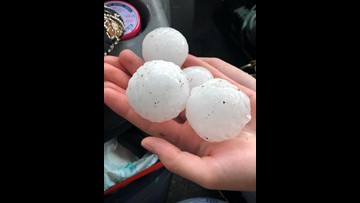



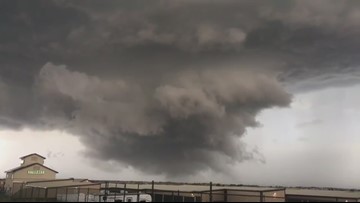
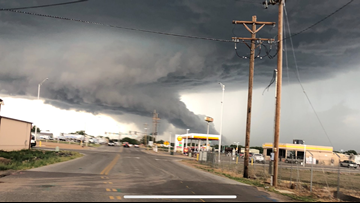

 Water floods out from crack in the road, following the Osaka quake.
Collapsing walls killed a 9-year-old girl as she traveled to school as well as an adult man, Japan's Chief Cabinet Secretary Yoshihide Suga said.
Local broadcaster NHK reported a third death and said that 200 people had been hurt. Nearly 700 people were in evacuation centers and 100,000 homes were without gas, NHK said.
Water floods out from crack in the road, following the Osaka quake.
Collapsing walls killed a 9-year-old girl as she traveled to school as well as an adult man, Japan's Chief Cabinet Secretary Yoshihide Suga said.
Local broadcaster NHK reported a third death and said that 200 people had been hurt. Nearly 700 people were in evacuation centers and 100,000 homes were without gas, NHK said.


No comments:
Post a Comment